
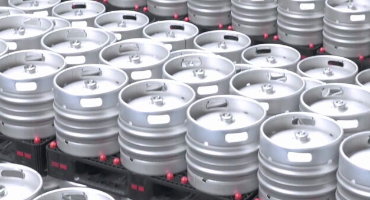
Breweries are increasingly adopting UHF RFID technology to modernise keg fleet management, addressing chronic issues like keg losses (typically 3–5% annually in the US, up to 5–20% for some craft brewers), poor supply chain visibility, manual inefficiencies, and disrupted operations that erode margins. Traditional methods with manual logs or using barcode technologies are labour-intensive, error-prone, damaged by dirt/condensation/handling, and lack real-time data. RFID provides automated, non-line-of-sight, bulk scanning with durable tags, delivering real-time visibility, better inventory control, loss reduction up to 80% reported, and automation across the full keg life cycle.
RFID Solves these problems and challenges:
Keg Losses: Cost the global industry hundreds of millions annually (e.g., $60M–$100M/year in the US; £50M/year in the UK). Kegs go missing due to theft, misplacement, delayed returns, or distributor mix-ups.
Poor Visibility: No reliable tracking of location, status (full/empty), cleaning history, or utilisation, leading to over-purchasing kegs, production delays, and inefficient logistics.
Manual Processes: Slow inventory counts, human errors, and compliance risks for hygiene/maintenance.
Supply Chain Friction: Impacts breweries, distributors, and venues with delayed pickups, excess fleet size, and suboptimal routing.
How RFID Enables Transformation - UHF RFID tags (passive, rugged, on-metal designs) give each keg a unique digital ID. Readers at key points (gates, filling lines, docks, cleaning stations) automatically log movements in bulk, updating ERP/WMS or cloud platforms in real time.
Key Stages of Automation in the Keg Life Cycle:
Filling & Outbound: RFID Tags scanned automatically at filling lines or exit gates. Logs fill date, batch, and status. Integrates with production planning.
Distribution & Delivery: Portal readers or handheld/mobile scanners track shipments. Some hybrid systems add IoT/GPS for in-transit visibility.
At Venues: Quick checks for returns; alerts for overdue kegs.
Return & Intake: Inbound gates log arrivals automatically, identifying owners even in mixed loads.
Cleaning & Maintenance: Scanned before/after cycles; history stored for compliance, predicting maintenance, and extending keg life (up to 20–30 years theoretically).
Inventory & Analytics: Real-time dashboards show utilisation, idle kegs, turnover rates, loss patterns, and fleet optimisation (e.g., reducing overall fleet size).
Software Ecosystem: Data feeds into cloud platforms for alerts (e.g., overdue returns), reporting, and predictive analytics. Mobile apps allow field visibility.
Real-World Benefits and Results:
Loss Reduction: Up to 80% in some adoptions; one provider (Keg Hounds with HID tags) helped recover 140,000+ kegs, saving $12.5M+.
Inventory Accuracy & Efficiency: Faster counts, reduced discrepancies, optimised fleet size, shorter turnaround times (simulations show 30%+ improvements), and better truck utilisation.
Cost Savings: Lower capital spend on new kegs, reduced labour, improved rotation, and compliance.
Sustainability: Higher reuse rates, fewer new keg purchases, optimised routes.
Scalability: Works for craft breweries to large operations; retro-fittable on existing kegs.
Implementation Considerations: Higher upfront costs (tags, readers, software) than barcodes, but strong ROI for medium-to-large fleets. Key needs include durable on-metal tags, strategic reader placement, staff training, and integration. Hybrid RFID + barcode or IoT approaches are common.
Overall, RFID shifts keg management from reactive, manual processes to proactive, data-driven operations—boosting margins, reliability, and efficiency in a high-volume, reusable asset environment. Many breweries now view it as essential for competitive, sustainable operations.
Contact in the UK: Barcode Technologies Ltd / RFID-UK Tel: 01442 872232 Email: sales@barcode-uk.com Websites: barcode-uk.com