

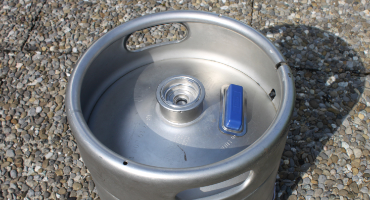
Using RFID Technologies UHF RFID tags to attached Beer Kegs to track their location, cleaning cycles and filling status with streamline warehouse, distribution, and return processes through automated bulk scanning. RFID UHF tags attached to beer kegs are rugged, specialised transponders to track their location, cleaning cycles, and filling status. RFID UHF tags attached to beer kegs drastically reduce keg losses, which can average up to 5% and streamline warehouse, distribution, and return processes through automated bulk scanning.
Key Features:
Built for Extremes: Keg tags are designed to handle rigorous sterilisation processes, caustic soda washing, and high-impact industrial environments.
On-Metal Capabilities: Because standard RFID tags fail when applied to stainless steel, keg tags (like the HID EXO Keg Tag) utilise specialised encasements to ensure reliable, long-range reading.
Bulk Reading: RAIN® RFID (UHF) tags allow breweries to scan entire pallets or full truckloads of kegs in seconds.
NFC Integration: Some breweries opt for NFC combo tags, allowing consumers or pub staff to scan the tag with a smartphone for quick information, such as keg batch details or return instructions.
Why Breweries Use UHF RFID tags to attached Beer Kegs to track their location, cleaning cycles and filling status:
Full Inventory Management: Provides real-time visibility of kegs in the warehouse, in transit, and at customer venues.
Asset Protection: Discourages theft and loss, cutting average keg loss rates from an industry average of 5% down to 1% or less.
On-Metal UHF RFID Tag UHF RFID tags for beer kegs are specialised, passive (or sometimes semi-passive) transponders designed for harsh industrial environments. They enable automated, contactless tracking of kegs throughout their life cycle including filling, distribution, use at bars/pubs, return, cleaning, and refilling which reduces losses, improving inventory accuracy, and ensuring hygiene compliance.
Why use UHF RFID Technologies:
On-Metal UHF RFID Tag UHF RFID tags use UHF -Ultra-High Frequency, typically 860–960 MHz, RAIN RFID - is preferred for keg tracking due to its long read range (several meters, up to 8+ feet depending on the tag/reader) and ability to read multiple tags simultaneously (bulk reading) without line-of-sight.
This allows fast scanning at portals (e.g., as kegs enter/exit facilities), on filling lines, or with handheld readers.
Unlike barcodes, tags survive repeated cleaning/sterilisation cycles where labels get damaged or unreadable.
Rugged Design Features: - These tags are engineered as "ruggedised" or "industrial" transponders:
IP68 or higher rating: Fully dustproof and waterproof, resistant to high-pressure washing, caustic soda (used in cleaning), sterilisation heat, impacts, and weather.
Metal-compatible On-Metal UHF RFID Tag Design: Standard RFID Tags struggles on conductive stainless steel kegs (common material). These tags use special spacers, ferrite materials, or antenna designs to detune interference and maintain performance when mounted directly on curved metal surfaces.
Durable materials: Often encased in tough plastic, polyurethane (PU) embedding, or designed for welding. Examples include bendable/flexible tags that conform to keg curves.
Long lifespan: Built for thousands of cycles, withstanding the full keg life cycle (often 10+ years of service).
Attachment Methods for On-Metal UHF RFID Tag UHF RFID tags:
Tags must stay securely attached despite rough handling, rolling, stacking, and transport:
Welding: Common for permanent attachment on steel kegs (e.g., via a steel ring or direct weld). Very secure for high-ruggedness needs.
Adhesive/Industrial glue: High-strength epoxies or specialised glues for quick application.
Mechanical Clip-on: Patented designs (e.g., HID Keg Hounds) clip inside the keg chime (lip/rim) without tools, adhesives, or welding—quick install (~5 seconds) and removable if needed.
Embedding: Some are PU-embedded for extra protection.
Placement is typically on the side, chime, or a protected area to optimise reads while minimising damage.
How RFID Technology Tracking Works:
Unique Asset Keg ID: Each RFID tag has a unique identifier (EPC) linked in a backend database/software to the specific keg.
Data Storage: Passive UHF tags can store small amounts of user data (e.g., fill date, last cleaning, ownership, cycle count) directly on the tag, or the ID triggers a database lookup for full history.
Read Points:
Fixed-Mount RFID Readers on portals and gates at breweries, warehouses, or trucks for automatic bulk reads.
Handheld RFID Readers for spot checks.
Integration with filling lines, cleaning stations, etc.
Lifecy Cyle Tracking:
Location: Real-time or near-real-time visibility (brewery → distributor → pub → return).
Cleaning Cycles: Scan before/after cleaning; log history to ensure compliance and predict maintenance.
Filling Status: Full/empty, fill date, batch info.
Usage History: Number of trips, age, damage indicators.
Additional sensors (in advanced systems) may add temperature, movement, or tap status, but basic UHF RFID is primarily identification + database-driven tracking.
Software ties it all together for analytics, alerts (e.g., lost kegs, overdue cleaning), and optimisation of keg fleets.
Benefits and Considerations:
Reduces losses: Kegs are expensive and often "disappear"; RFID improves recovery and turn rates.
Efficiency: Faster inventory, less manual labour, better compliance.
Cost: Higher upfront (tags + readers/infrastructure) than barcodes, but ROI is strong for larger operations with many kegs.
Some systems combine RFID with other tech (e.g., GPS trackers on high-value fleets) for broader coverage.
Contact in the UK: Barcode Technologies Ltd / RFID-UK Tel: 01442 872232 Email: sales@barcode-uk.com Websites: barcode-uk.com